Are you an inventor struggling because protecting your ideas feels like a maze built in a different language?
You start with excitement. A breakthrough idea. Then you enter the world of IP protection and suddenly you are expected to understand legal processes, technical drafting and strategic decisions all at once.
This is where the gap begins.
Between inventors and IP lawyers, between innovation and execution, between protection and real-world direction.
And it is exactly this gap that Emanus is built to bridge. Keep reading to make your journey from idea to protected invention clearer and far more collaborative.
Understanding the Role of IP Lawyers
IP lawyers and patent agents play a foundational role in protecting innovation. Their work is essential to helping inventors secure intellectual property rights.
In practice, this includes conducting prior art searches to determine whether an idea is truly novel, identifying the correct type of patent protection, drafting detailed applications that meet legal standards and responding to patent office examinations throughout the approval process.
They also manage timelines, filings and compliance requirements ensuring that the invention meets all legal thresholds required for protection.
However, it is important to understand what this role is not designed to do.
Patent law is primarily about protectability, not commercial direction. A patent can be perfectly written and still not translate into market success if the invention itself is not clearly defined or strategically positioned.
This is where many inventors misunderstand the boundary of legal support.
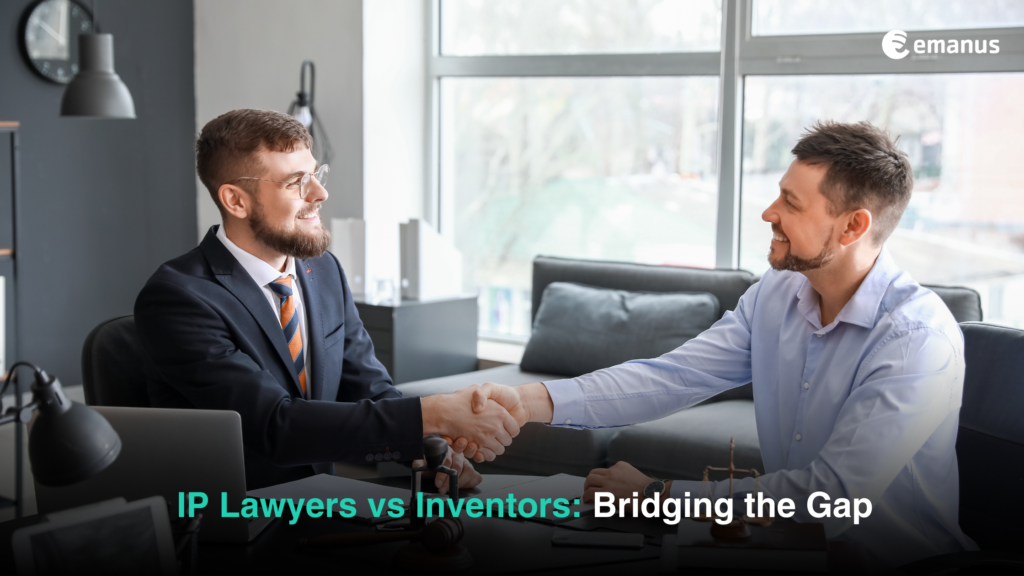
The Inventor-Attorney Relationship is a Collaboration
Your invention is only as strong as the collaboration behind it.
Patent attorneys guide and protect your intellectual property, but inventors also play an active role in shaping the outcome.
To get the most out of working with IP lawyers or a patent agent, inventors should come prepared with:
- A clear description of the problem being solved
- How the invention works in practice
- Any sketches, visuals or technical explanations
- Early commercial thinking or market direction
- Competitor or product comparisons (if available)
Without this input, even experienced professionals offering invention help are working with incomplete information.
Where Inventors Feel the Gap
Many inventors expect their patent attorney to guide them through both legal and commercial decisions. But in practice, most IP lawyers focus on protection, not business strategy.
That creates three common gaps:
The first is commercial uncertainty. Inventors may successfully secure protection but still struggle to understand how their IP translates into revenue, licensing opportunities or investor interest.
The second is communication complexity. Legal language is precise by design, but for first-time inventors, that precision can be difficult to translate into action.
The third is strategic isolation. Once filings begin, inventors are often left to independently decide how their invention fits into a broader business or product roadmap.
This is not a flaw in the legal system, it is simply a limitation of its scope.
Which is why many inventors begin looking for support that goes beyond filing. Structured inventor resources at this stage help inventors better prepare before engaging legal support.
How Emanus Fills This Gap
Emanus LLC is an intellectual property support and commercialization-focused firm that works with inventors to bridge the gap between early-stage ideas and formal patent protection.
Emanus helps inventors take an idea and turn it into something that can actually survive the real-world requirements of intellectual property protection.
Where most inventors struggle is translating imagination into structured technical clarity. Emanus focuses on that exact gap.
For example, many inventors approach concepts like “a smarter medical device,” “a new software workflow,” or “an improved mechanical system,” but without the level of detail required to define boundaries, differentiate novelty or support patent claims. In these cases, Emanus works with the inventor to break the idea into functional components, real-world use cases and clear problem-solution framing. That structure then becomes usable by IP lawyers for formal patent drafting.
“Wil’s expert guidance throughout the invention process has been invaluable. His thorough knowledge of patents and dedication to protecting my ideas have provided me with confidence and peace of mind. With his marketing expertise and reliable communication, Wil has helped move my product forward smoothly. I highly recommend him to anyone seeking a trustworthy, diligent professional.”
— Elizabeth Carroll
These experiences highlight how inventors feel more clarity and better control over their invention before it enters the legal system.
Emanus IP Workflow
Our inventor-to-patent workflow is not just legal. It is structured, communicative and iterative.
| Stage | Inventor Role | Role of Emanus IP Lawyers/Patent Agents |
| Idea Development | Define problem and concept | Assess initial patentability |
| Invention Structuring | Provide details, visuals, use cases | Guide technical requirements |
| Patent Drafting | Clarify invention logic | Draft and refine application |
| Filing Process | Provide feedback and clarifications | Manage USPTO submissions |
| Post-Filing Strategy | Consider commercialization direction | Handle legal follow-ups |
When both sides contribute effectively, the outcome is stronger protection and better long-term value.
Why Inventors Should Rethink “Best IP Lawyers”
The phrase best IP lawyers is often associated with large firms, reputation or scale.
But for inventors, the real question is different:
Which team understands my invention, communicates clearly and aligns with my goals?
Sometimes that means a large firm. Sometimes it means a specialized patent agent. And sometimes it means working with structured support systems like Emanus that improve preparation before legal engagement.
The right fit is the most aligned process.
FAQs
- What do IP lawyers do?
IP lawyers and patent agents help protect inventions by conducting prior art searches, drafting patent applications and managing filings with patent offices like USPTO. Their role ensures that an invention meets legal requirements for protection.
- How much do IP lawyers make?
It varies based on experience and specialization, but they typically earn high salaries, from about $60K to $100K+ depending on experience and location. Senior lawyers and partners can make upto $1M+.
- Why do inventors need support beyond filing patents?
A patent only protects an idea, it doesn’t make it successful or profitable. You still need strategy, product development and market execution.
- What should inventors prepare before meeting a patent attorney?
A clear explanation of the invention, simple visuals, and the problem it solves.Any early thoughts on users, use cases or market ideas also help.
- Is working with IP lawyers enough to build a successful invention business?
Not always. Legal protection is just one piece of the puzzle. Success also depends on execution, business strategy and commercialization.
- How is Emanus different from an IP law firm?
Emanus is not a law firm. It is an IP support and commercialization guidance layer that helps inventors structure their ideas, improve clarity and prepare more effectively for working with patent professionals.
Wrapping Up
The gap between IP lawyers and inventors is not about expertise. It is about alignment, communication, and expectations.
Inventors bring ideas. IP lawyers bring legal structure. But without collaboration, the bridge between the two can feel incomplete.
Emanus helps close that gap by supporting inventors with clarity, preparation and guidance so when they engage with professionals in IP, they are not just filing ideas.
They are building well-prepared, strategically positioned inventions.