
What if your invention or patent could make money even when you’re not working? That’s the power of technology licensing. In a world where innovation drives growth, licensing technology transforms intellectual property into recurring revenue without selling your creation. Just ask ARM, their chip designs power billions of devices, yet they don’t manufacture a single one.
This blog breaks down how to monetize your IP smartly and unlock its full earning potential.
What is Technology Licensing?
Technology licensing is when a company grants another the right to use its patents, software, or trade secrets in exchange for royalties or fees. It helps innovators turn ideas into steady income while keeping ownership.
For instance, Ericsson Technology Licensing enables companies worldwide to use its patented 5G innovations, generating billions annually through strategic partnerships.
Why License Your Technology Instead of Selling It?
Keep Ownership, Earn Continuously:
Retain your intellectual property while earning steady royalties instead of a one-time payout.
Expand Without Heavy Investment:
Scale globally through partners who already have market access.
Reduce Risk, Maximize Reach:
Shift production and commercialization risks to the licensee while you enjoy revenue from multiple markets.
Read our tips to patent an idea guide to learn how to protect your invention before licensing.
Benefits of Technology Licensing for Startups and Innovators
- Steady Revenue Stream
- Faster Market Expansion
- Scalable Growth
- Sustained Value Creation
- Legacy and IP Protection
Types of Technology Licensing
Choosing the right technology license agreement depends on your goals and risk tolerance:
- Exclusive License:
One company gets full rights. Ideal for high-value or long-term deals.
- Sole License:
You share rights but retain use. Great for collaboration and brand presence.
- Non-Exclusive License:
Multiple companies can license your IP at once, perfect for scalability.
Types of IP Licensing Models
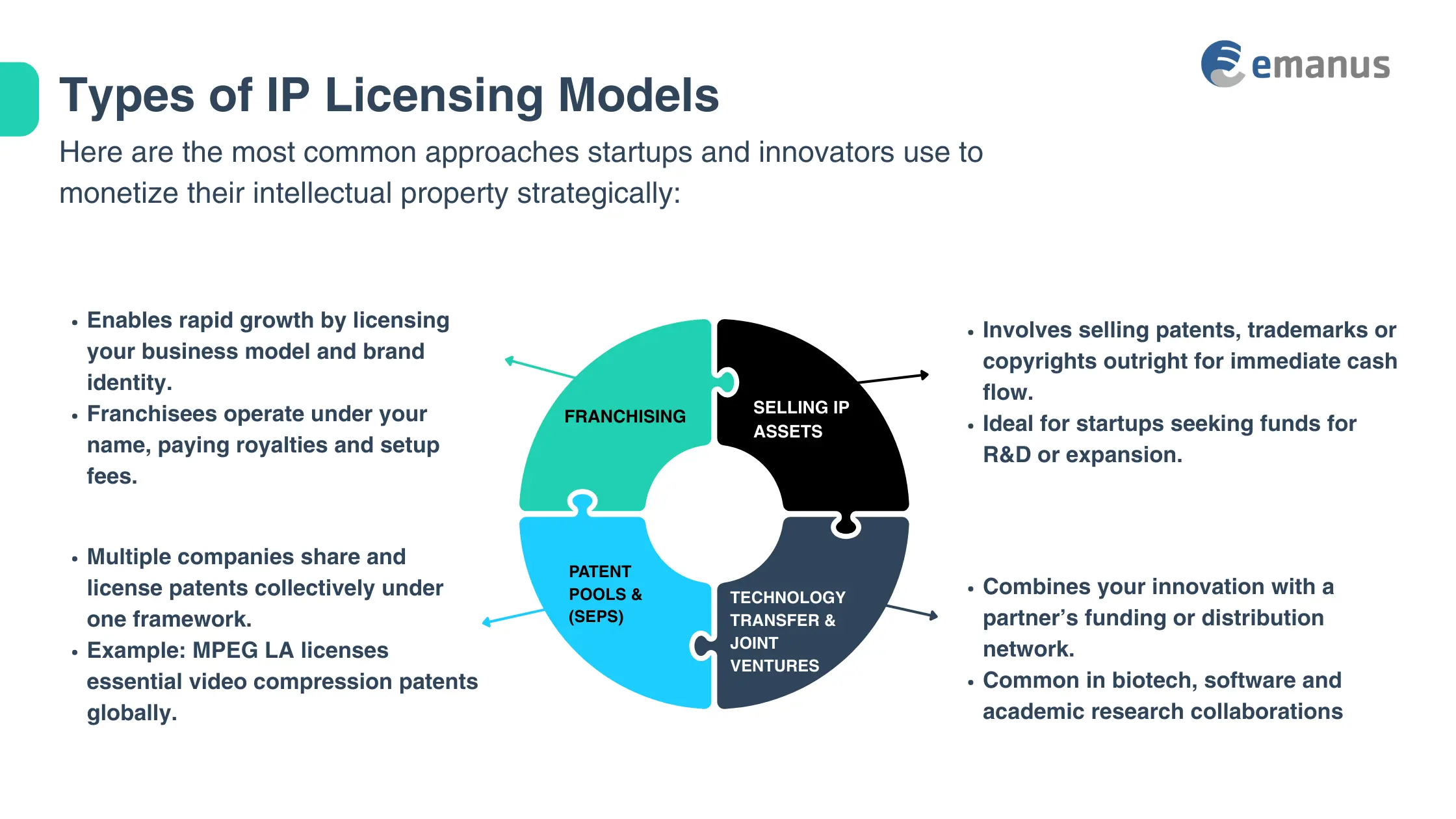
Here are the most common approaches startups and innovators use to monetize their intellectual property strategically:
- Franchising
- Enables rapid growth by licensing your business model and brand identity.
- Franchisees operate under your name, paying royalties and setup fees.
- Selling IP Assets
- Involves selling patents, trademarks or copyrights outright for immediate cash flow.
- Ideal for startups seeking funds for R&D or expansion.
- Technology Transfer & Joint Ventures
- Combines your innovation with a partner’s funding or distribution network.
- Common in biotech, software and academic research collaborations.
- Patent Pools & Standard-Essential Patents (SEPs)
- Multiple companies share and license patents collectively under one framework.
- Example: MPEG LA licenses essential video compression patents globally.
Steps to Monetize Your Intellectual Property Through Licensing
Follow these six practical steps to build a successful technology licensing strategy:
1. Identify Your Valuable IP Assets
- Start by auditing your patents, software, trademarks or creative works.
- Focus on assets with proven demand or competitive advantage in your industry.
2. Secure Legal Protection
- Protect your IP through patents, copyrights, trademarks or trade secrets before offering it to others.
3. Select the Right Licensing Model
- Choose between exclusive, non-exclusive or sole agreements based on your business goals.
4. Define Clear Licensing Terms
- Outline the scope, duration, territory and fees (royalties or fixed payments).
- Clarify usage rights and renewal options to avoid disputes later.
5. Draft a Solid Licensing Agreement
- Partner with a technology licensing attorney to ensure legal clarity.
6. Manage and Monitor Licensing Relationships
- Establish reporting schedules, performance metrics and renewal timelines.
Tip: Explore our IP Licensing Profit Playbook for more practical strategies.
For professional help, read our guide on the best patent law firms in the USA.
Key Components of an Intellectual Property Licensing Agreement
| Component | What it Means | Why It Matters |
| IP Rights | Define what’s being licensed. | Clarifies ownership and scope. |
| Fees & Royalties | State upfront payments and ongoing royalties. | Ensures fair value for both parties. |
| Territory | Specify where the license applies geographically. | Prevents overlap or misuse. |
| Field of Use | Outline approved uses or industries. | Avoids unauthorized applications. |
| Term | Set the duration and renewal terms. | Keeps expectations clear. |
| Exclusivity | Choose exclusive, sole or non-exclusive rights. | Controls market access. |
| Risk & Performance | Define shared risks and performance goals. | Encourages accountability. |
| Termination | Detail early-exit or breach conditions. | Protects both parties legally. |
To estimate total IP expenses before licensing, read our patent cost guide.
Conclusion:
Your innovation deserves monetization. Technology licensing turns your IP into profit without losing control. Don’t let your ideas sit idle. Partner with Emanus IP to develop tailored licensing strategies that maximize value and protect your innovation so you can focus on creating the future.
FAQs
- How to monetize your intellectual property?
You can monetize your IP by licensing it, selling it or earning royalties when others use your technology. - How does technology impact intellectual property?
Technology makes it easier to create, protect and share IP but also increases risks of copying and misuse. - What is monetization in technology?
It means turning your invention or software into revenue through licensing, subscriptions or partnerships. - How can brand owners benefit from licensing their intellectual property?
Licensing lets brand owners earn income, expand into new markets and grow visibility without large investments. - How to license technology?
Protect it legally, approach potential partners, and draft a technology license agreement. - What can brokerages do to ensure licensees use technology properly?
They can monitor usage, audit reports and enforce licensing terms to prevent misuse or unpaid royalties. - What is Ericsson Technology Licensing?
It’s Ericsson’s global program that licenses its patented mobile and 5G technologies to other companies for royalties. - Can engineering technology graduates earn a PE license?
Yes, in some U.S. states, engineering technology graduates can qualify for a Professional Engineer (PE) license with relevant experience.