
Nearly 50% of granted patents never generate a single dollar, according to Forbes. In 2026, with new USPTO programs and accelerated tech markets, commercializing your patent is your competitive edge. This guide walks you through the key steps of commercializing inventions effectively and transforming your patent from a legal document into a profitable asset.
Understanding Patent Commercialization in 2026
Commercializing a patent in 2026 looks very different from five years ago. Faster USPTO review programs, AI-driven markets and investor demand for “IP-backed innovation” are reshaping how inventors bring ideas to market. Patent monetization matters now more than ever so let’s dive right into it.
Read our guide on how to commercialize your invention in the US to understand the full legal and market process.
Step 1 — Assessing the Commercial Potential of Your Patent
Before investing time and resources, evaluate whether your invention has market potential:
- Market demand: Identify your target customers and determine if they would pay for your solution.
- Competitive landscape: Research existing solutions to understand where your patent provides unique value.
- Feasibility: Consider technical and manufacturing limitations that could impact scalability.
A clear assessment helps prioritize efforts and choose the most effective patent monetization path.
Step 2 — Choosing the Right Monetization Path
There are several ways to generate revenue from a patent:
- Licensing: Grant others permission to use your patent in exchange for royalties. Can be exclusive or non-exclusive.
- Selling the patent: Transfer ownership through a one-time sale, often via patent brokers, online marketplaces or direct outreach.
- Enforcing your patent: Protect your IP from infringement via legal action, potentially with litigation funding or contingent fee arrangements.
- Starting a business: Use your patent as the foundation for a startup, developing and selling the product yourself.
- Joint ventures: Collaborate with companies to share resources, costs and profits from the patented technology.
- Enhancing an existing company: Incorporate the patent to improve products, create new revenue streams or gain a competitive edge.
Your choice should align with your goals, resources and market conditions especially if your goal is commercializing inventions for long-term impact.
Step 3 — Develop a Commercialization Strategy
Once you select a path, craft a detailed strategy:
- Market research & entry plan: Identify customer segments, pricing, distribution channels and promotion tactics.
- Prototyping & testing: Build prototypes and run beta tests to refine your product and ensure it meets market needs.
- Strategic partnerships: Collaborate with manufacturers, distributors or marketing partners to scale efficiently.
- Regulatory compliance: Verify industry standards and legal requirements to avoid delays or penalties.
- Operations planning: Prepare supply chains, production processes and quality control systems for scale.
A strong strategy is the backbone of successful commercializing your innovation and maximizing patent monetization opportunities.
For a broader perspective, explore our technology commercialization guide.
Step 4 — Protecting Your IP Globally Before Monetizing
Patents are territorial, so global protection is essential if you plan to commercialize internationally:
- File in relevant jurisdictions: Consider patent offices in regions where your product could sell.
- Maintain IP portfolio: Monitor expiration dates, renewals and potential infringements.
- Confidentiality agreements: Use NDAs when discussing your patent with potential partners or investors.
Global IP awareness strengthens your path to commercializing in multiple markets and safeguarding future patent monetization.
Step 5 — Promoting Your Patent
A strong promotion strategy can attract licensees, buyers or investors:
- Digital presence: Create a website showcasing your patent, its applications and contact options.
- Social media engagement: Share updates, product demonstrations and development stories on platforms like LinkedIn or Twitter.
- Video demonstrations: Visual content helps explain complex inventions quickly and effectively.
- Webinars & live demos: Engage directly with potential partners or customers to answer questions and showcase value.
- Networking & events: Attend trade shows, conferences and inventor meetups to connect with industry professionals.
- Patent databases & inventor groups: List your patent online and participate in inventor communities to broaden exposure.
Promotion amplifies your visibility and accelerates commercializing inventions across industries.
Step 6 — Continuous Improvement and Adaptation
Commercialization doesn’t end at market entry. Stay ahead by:
- Iterating on your product: Use feedback from early users to refine and improve the invention.
- Exploring new markets: Consider international expansion or new applications of your technology.
- Developing additional IP: Filing related patents keeps competitors at bay and strengthens your market position.
Avoid These Common Commercialization Mistakes
Even the best inventions can fail commercially if these pitfalls are overlooked:
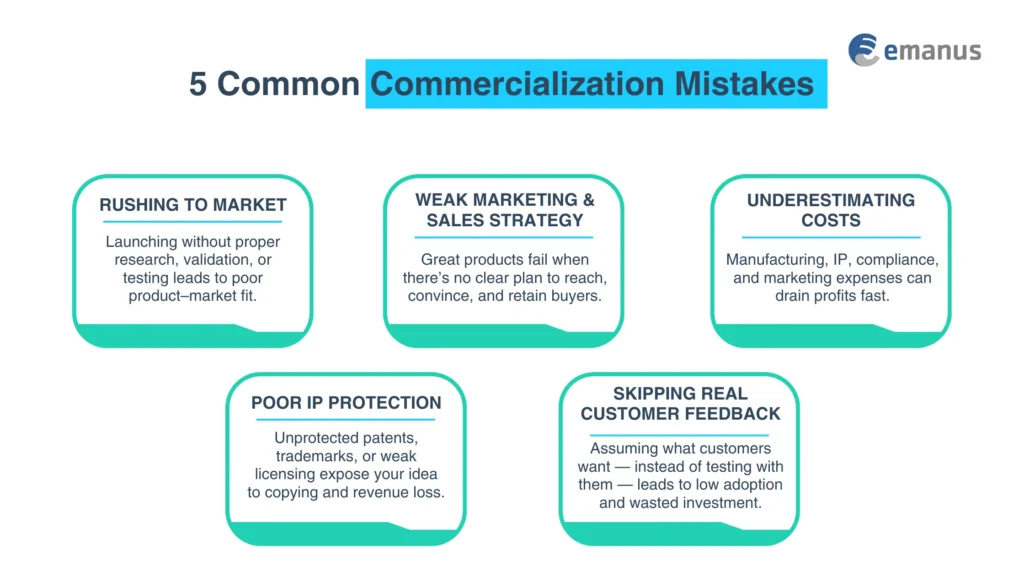
- Rushing to market: Without proper research or testing, products may underperform or fail.
- Ignoring marketing & sales: A great invention still needs a strong strategy to reach buyers.
- Underestimating costs: Manufacturing, legal, and marketing expenses can quickly erode profits.
- Failing to protect IP: Unmonitored patents or weak licensing agreements can lead to infringement and lost revenue.
To avoid costly setbacks, read about the challenges of commercialization inventors commonly face.
Conclusion
Your patent has value. It can be licensed, sold, manufactured or turned into a startup but only if you take the next step. And the real advantage goes to innovators who make strategic moves. At Emanus, we help inventors turn ideas into income through expert guidance across every stage of the journey.
Ready to turn your patent into profit? Book a patent monetization and commercialization strategy session with Emanus, LLC today and get a clear roadmap to monetize your innovation. Let’s build the future of your invention together.
FAQs
How do I sell my ideas for money?
You can sell ideas by licensing them, selling your patent rights or pitching companies under NDAs.
How do I turn my idea into a patent?
Document it, run a patent search, prepare drawings and file a provisional or non-provisional patent with the USPTO.
How to pitch an idea and not get it stolen?
Use NDAs, share only necessary details and protect your concept with patents, trademarks or copyrights first.
Can you sell your patent idea?
Yes, patent owners can license it for royalties or sell the patent outright for a lump sum.
Can I patent an idea myself?
Yes. Though you can file it yourself, professional help is recommended because patent drafting is complex.
Is it worth it to patent an idea?
Yes, if your idea has commercial potential and you want exclusive rights to stop competitors.
How much money do you need to patent an idea?
Most patents cost $2,000–$10,000 including filing, search, exam and attorney fees.