
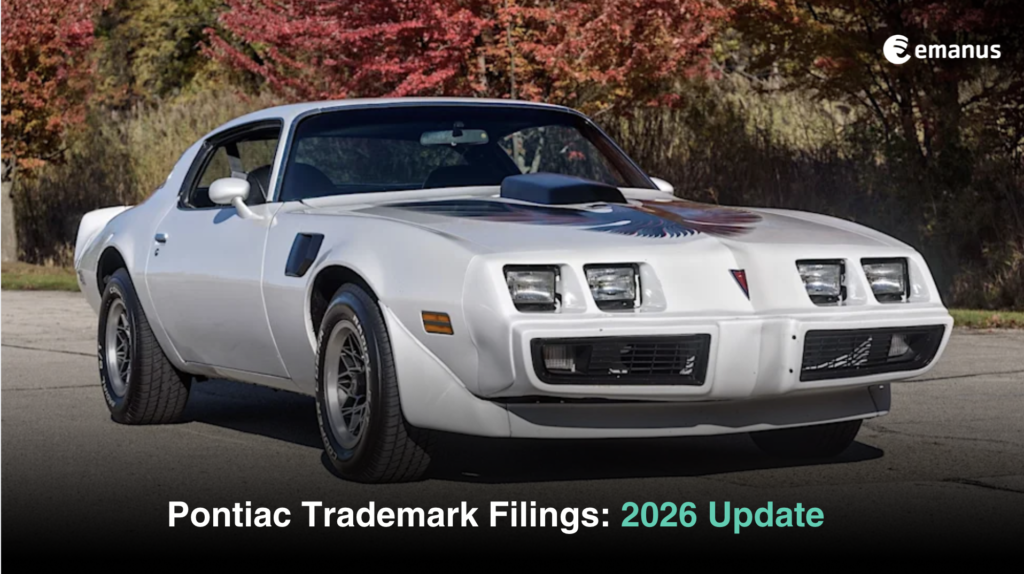
Pontiac isn’t coming back so why is General Motors still filing trademarks? For a moment, the internet thought Pontiac was making a comeback. New Pontiac trademark filings sparked headlines, enthusiasts celebrated, and rumors of a new Firebird spread across forums and social media. But there was one problem:
The filings weren’t for cars. They were for merchandise. This is exactly why trademark filings are so often misunderstood. A filing tells you what a company wants to protect, not necessarily what it plans to build. General Motors’ handling of the Pontiac brand offers a fascinating lesson in intellectual property strategy, and one that every founder and brand owner can learn from. Let’s unpack it.
Who Owns the Pontiac Trademark?
There is no single, worldwide “Pontiac trademark.” Trademark rights are territorial and are tied to specific registrations, classes, and goods or services in each jurisdiction. General Motors LLC holds multiple Pontiac trademark rights, including recent filings in the United States.
For example, in the United States, General Motors LLC filed PONTIAC, USPTO Serial No. 99155798, on April 25, 2025. The application covers Class 12, including hub caps, horns, license plate frames, and novelty license plate frames for vehicles. The application was registered on December 2, 2025, as U.S. Registration No. 8051415, and is currently listed as live/registered.
GM does not own Pontiac everywhere through one universal registration. Instead, its trademark portfolio consists of individual rights maintained in particular jurisdictions and for particular goods and services.
Why Would GM File Trademarks for a Brand It Doesn’t Use?
Trademarks are valuable business assets, but paying renewal fees alone does not keep a trademark protected indefinitely.
In the U.S., trademark rights generally depend on bona fide use. The USPTO notes that three consecutive years of nonuse can be evidence of abandonment, unless the owner can show an intent to resume use or another recognized basis for nonuse.
So why does GM continue filing for Pontiac-related marks? Because specific uses, goods, and markets can still create legitimate trademark rights. Those rights can also support licensing opportunities and help GM challenge unauthorized uses of its brands.
For any brand owner, maintaining a trademark means more than paying the renewal fee. Use matters. So do the goods, services, and jurisdictions covered by the registration.
What These Filings Actually Tell Us
One of the biggest mistakes people make when reading trademark databases is assuming every filing signals a new product launch.
It doesn’t.
The most important part of any trademark application isn’t the brand name. It’s the goods and services description.
In Pontiac’s case, the filings protect merchandise rather than motor vehicles, making them part of a defensive IP strategy rather than evidence of a vehicle revival. Reading that detail is what separates informed IP analysis from speculation.
For startups monitoring competitors, this distinction matters. A competitor filing in a new category may simply be closing gaps in its trademark portfolio rather than entering a new market.
Is Pontiac Actually Returning?
As of 2026, there is no confirmed Pontiac revival.
GM has announced no plans to relaunch Pontiac vehicles, and no recent trademark filings cover automobiles. Much of the speculation can be traced back to a parody advertisement published in 2024 that many readers mistook for a genuine announcement.
Despite the excitement, GM publicly clarified that the advertisement was fictional and that it had no involvement.
This demonstrates something remarkably powerful:
Even after more than a decade off the road, Pontiac’s brand still commands attention.
That lingering recognition is precisely why GM continues investing in trademark protection.
Four IP Lessons Every Founder Should Learn
GM’s strategy highlights four principles every growing business should understand.
1. A dormant brand still needs protection
Stopping production doesn’t automatically end trademark rights. But maintaining protection requires more than simply renewing registrations. Actual use and the specific legal requirements of each jurisdiction matter.
2. A trademark filing isn’t a product announcement
Before drawing conclusions, read the goods and services covered by the application. That’s often where the filing’s real purpose becomes clear.
3. Strong brands deserve broad protection
Broad filing for the sake of being broad isn’t the goal. Protection should reflect legitimate commercial activity, planned use, relevant goods and services, and priority markets. Filing strategically helps businesses protect what they actually plan to build.
4. Brand equity outlives products
Pontiac hasn’t sold a new vehicle in years, yet a simple trademark filing still generated worldwide headlines. That kind of recognition is an asset worth protecting.
For startups, this is a reminder that the brand you’re building today may become one of your company’s most valuable long-term assets.
Frequently Asked Questions
1/ Has General Motors renewed the Pontiac trademark?
Yes, but the recent filings are separate applications covering different marks and goods. In April 2025, General Motors LLC filed a U.S. application for the PONTIAC name covering goods such as hubcaps, horns, and license plate frames. Separately, in July 2025, GM filed FIREBIRD applications with the EUIPO covering merchandise such as novelty signs.
These should not be treated as one filing or as evidence of a Pontiac vehicle relaunch.
2/ Who currently owns the Pontiac trademark?
General Motors LLC owns multiple Pontiac-related trademark registrations, rather than one worldwide trademark. These rights vary by country and by the goods or services covered. For example, GM has a U.S. PONTIAC registration and separate EUIPO FIREBIRD filings for merchandise.
3/ s the Pontiac trademark still active?
Yes. The Pontiac trademark remains active and is legally protected by General Motors. Although Pontiac vehicles are no longer produced, GM continues to maintain the brand through periodic trademark filings, ensuring its rights remain in force.
4/ Is Pontiac making a comeback in 2027?
There is no evidence that Pontiac is coming back in 2027. GM has not announced plans to revive the brand, and its recent trademark filings relate only to merchandise, not passenger vehicles. The filings are part of GM’s ongoing trademark protection strategy rather than an indication of a new Pontiac lineup.
Final Thoughts
The recent Pontiac trademark filings don’t point to a hidden vehicle launch. They show how a company can continue managing a valuable brand even after its original product is gone.
For your own business, take a few minutes to review your trademark portfolio. Are your registrations still tied to the goods and services you actually offer? Do they cover the markets you’re planning to enter? Are there gaps worth addressing?
If you’re not sure where your protection stands, you can review Emanus Global Trademark Services to see how a more strategic approach can fit your business.