
Imagine waking up to see your video reposted by a major page without credit, permission or payment. It happens daily and many creators don’t realize how vulnerable their content’s intellectual property is until it’s too late. As the creator economy grows past $100 billion, protecting your IP becomes essential to keeping ownership and profits where they belong. Here’s what you need to protect now.
Why Intellectual Property Matters for Content Creators
Content creators rely on original work, distinctive branding and personal image to stand out in a crowded digital landscape. Without IP protections, you risk:
- Others reproduce your content without permission (copyright infringement).
- Copycat brands or influencers diluting your identity.
- Losing control over monetization opportunities.
To understand how IP directly impacts revenue, read our guide on the importance of commercialization for your business. Understanding and protecting your IP ensures that your content remains yours, and that you are properly compensated when others want to use it.
Key Types of Intellectual Property for Creators
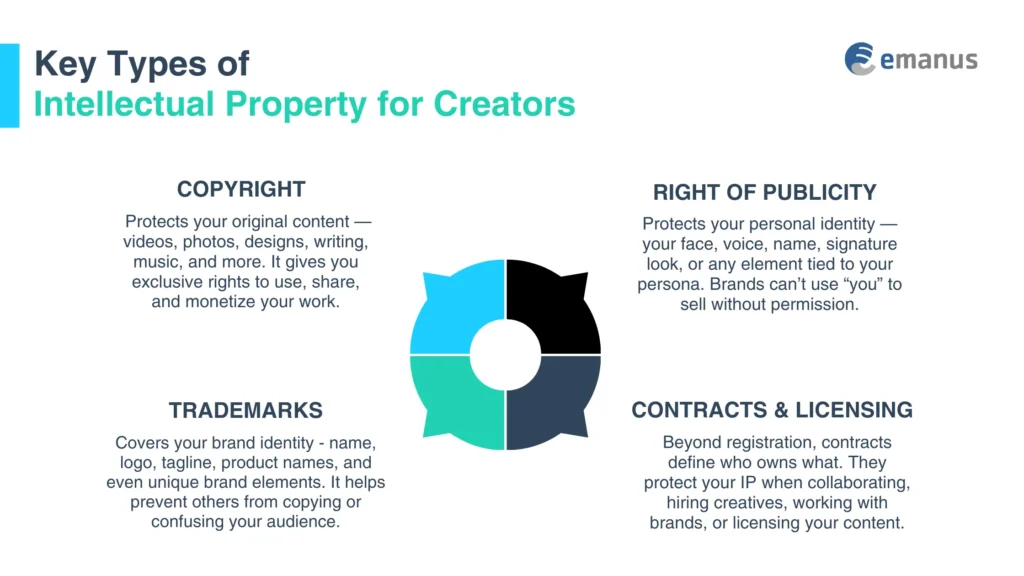
1. Copyright
Copyright protects original works of authorship. For creators, this includes:
- Photos, video, and social media posts
- Blog articles or written content
- Music, podcasts or audiovisual works
Proper copyright protection helps prevent copyright infringement and ensures creators are fairly compensated.
2. Trademarks
Your brand identity including your name, logo, tagline or catchphrase may qualify for trademark protection. Trademark your brand to:
- Prevent others from using your brand in commerce
- Maintain control over how your personal brand is presented
- Protect unique product lines or content series
Registering a trademark with the USPTO ensures legal recognition and enforceable rights nationwide.
3. Right of Publicity
Your image, voice and name are valuable assets. The right of publicity protects you from unauthorized commercial use of your persona. For example:
- Endorsements or sponsorships using your image
- Marketing campaigns featuring your likeness
Proper protections ensure that you are compensated fairly for the commercial use of your identity.
4. Contracts and Licensing
IP protections don’t stop at registration. When you collaborate with brands or license your content, contracts are key. A strong contract should clearly outline:
- How your content may be used
- Compensation for your work
- Ownership and licensing rights
For a deeper look at turning IP into income, see our commercializing your patent 2026 guide. Well-crafted agreements, combined with digital rights management, minimize disputes and maintain your control over your creative output.
Common IP Challenges for Content Creators
Even with awareness, creators often face challenges in protecting their IP:
- Unauthorized Use of Content: Copyright infringement, reposts, screenshots or reposted videos without permission are common.
- Brand Theft or Mimicry: Copying a logo, aesthetic or tagline can dilute your brand.
- Complicated Licensing Agreements: Vague contracts may result in lost control or underpayment.
- Defamation or Misrepresentation: Misuse of your image or name can harm your reputation.
Awareness of these risks allows you to proactively protect your content and enforce your rights when necessary.
How Legal Support Can Help
Legal experts can guide creators through every step of IP protection:
- Copyright Registration: Secure exclusive rights to your photos, videos, blogs or music by copyright for content creators and copyright protection.
- Trademark Filing: Protect your brand name, logo or catchphrase in commerce. If your audience or brand is global, review the USPTO strategic plan for international applicants.
- Right of Publicity: Ensure your image, voice and name aren’t exploited without consent.
- Contract Review and Negotiation: Safeguard your rights in brand deals, sponsorships and collaborations.
- IP Enforcement: Take action against copyright infringement and seek compensation for misuse.
Myths vs. Facts: What Content Creators Often Get Wrong About IP
Even seasoned content creators fall for these common misconceptions. Clearing them up can be the difference between owning your brand or losing it.
Myth 1: “Posting my content online automatically protects it.”
Fact: Watermarks deter casual thieves, not commercial infringement. Digital rights management tools, copyright registration and contracts are necessary for protection.
Myth 2: “A watermark or timestamp is enough to protect my work.”
Fact: Watermarks deter casual thieves, not commercial infringement.
If a brand removes it or edits around it, you still need legal protection to take action and claim compensation.
Myth 3: “My brand name is safe because I’ve been using it for years.”
Fact: Use does not equal ownership.
Another creator or even a company can file a trademark first and legally block you from using your own name, slogan or logo. Yes, it happens more often than you’d think.
Conclusion
Content moves fast, and thieves move faster. Your videos, designs, brand name and audience are valuable IP assets. Without the right protections, anyone can copy and profit from what you created.
Copyrights. Trademarks. Contracts. These tools keep your work yours and your revenue in your hands. Don’t wait for someone to steal your content. Let Emanus, LLC safeguard your creative ideas before anyone else claims them.
FAQs
How to protect your intellectual property as a content creator?
Register copyrights, trademark your brand, use watermarks, NDAs, licensing terms and DMCA takedowns.
How do content creators protect their content?
They use copyright registration, licensing agreements, watermarking, contracts and platform tools like DMCA removal.
What protects a creator’s right to their intellectual property?
Copyright protection automatically protects original creative work from the moment it’s created.
What are the 4 types of IP protection?
Patents, trademarks, copyrights and trade secrets.
What is the 5-5-5 rule for social media?
Post 5 curated posts, 5 original posts and 5 engagement posts to balance content strategy.
How to protect your intellectual property on Instagram?
Watermark your content, register copyrights, use brand trademarks and file DMCA takedowns against infringers.